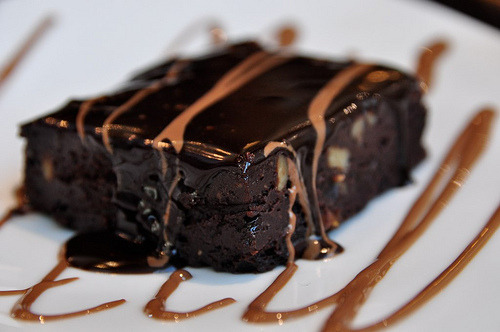
This post is just by way of keeping track of what I have made lately, since the weather has cooled off and I can decently cook again (during the summer I got up at 5am, cranked the AC, and baked myself a lemon birthday cake from scratch, but that was really the extent of my cooking since June).
Working now with Italian-Americans I have naturally become more interested in Jewish-Italian cooking. Friday I made Pizze Ebraiche, which is a kind of butter bar cookie with raisins, pine nuts, almonds, and candied fruit (I also added currants). Unbelievably delicious. I managed to give away only a small handful of them, to Harriet and to Sara, and the rest I ate my damn self, and I don't care. But I will make some more and bring them to work, for they are really good.
Tonight I am making pasta fagioli for the first time. I soaked the beans starting just before Shabbos Friday night. I used navy beans, not knowing any better. We will see how it goes. I am using Giarda whatshername's recipe online, modified slightly by not using any ham and trying to incorporate what I remember of Rosangela's telling me how her mother makes it. Next time I might try using canned beans and the can liquid, which Rosangela says is OK.
Sunday, October 7, 2012
Sunday, September 9, 2012
The Jews and the Italians
A lovely past few days, foodwise. First, when I arrived at work on Friday morning I discovered a jar of homemade tomato sauce on my desk: a gift from Carmine, a colleague. He had regaled me a week or so before with tales of his (immigrant Italian) mother's making sauce, the ordeal it was to get everything ready, the tomatoes, the jars, the burners for cooking, the vats themselves, the pressing/straining and the cooking and the jarring and resterilizing. At the end, he said, they would come out with some 100 or more jars. The way he talked about it got me so excited I impulsively asked him for a jar. Later on I was kicking myself. What kind of a selfish coworker asks for a jar of someone's mother's homemade food? Ugh. But sure enough, he left one for me, and I am thrilled. I want to be sure I try it in a good way, with decent pasta, and at a real dinner, not grazing for myself.
Then today I went to the Museum of Jewish Heritage, down at Battery Park, with little Rosangela, another beloved colleague of mine, and her equally lovely husband, Luis. We went to hear a panel discussion on Jewish Italian food. It was a good program, and there were tastings afterward: a Shabbat-appropriate spaghetti dish; some kind of fennel gratin; cheeses; some fish burekas (delicious); some kind of dessert I didn't get; kosher wine (which I boycott, so I didn't drink it). It was really charming to be with them and to chat about these things together. Such nice young people!
All right, I will go now and try to make a Rosh Hashanah honey cake.
Then today I went to the Museum of Jewish Heritage, down at Battery Park, with little Rosangela, another beloved colleague of mine, and her equally lovely husband, Luis. We went to hear a panel discussion on Jewish Italian food. It was a good program, and there were tastings afterward: a Shabbat-appropriate spaghetti dish; some kind of fennel gratin; cheeses; some fish burekas (delicious); some kind of dessert I didn't get; kosher wine (which I boycott, so I didn't drink it). It was really charming to be with them and to chat about these things together. Such nice young people!
All right, I will go now and try to make a Rosh Hashanah honey cake.
Wednesday, February 29, 2012
Back to Blogging
Here's why. I stopped because blogging was distracting from the actual writing of the book, so I took some time to get chapters ready to send to a publisher as a proposal, and now I am waiting to hear from them. It's been almost three months, which I am assured is standard. I still feel very optimistic: I think the timing is good and the idea and execution are good. So, keep your fingers crossed.
Meanwhile, the better part of a Jewish-food-eating year has gone by! I think my biggest revelation in the past several months has been this Hungarian Sour-Cream Cherry Cake recipe I discovered. I made it twice, and it is heaven on earth. When sour cherries are in season, in a few months, I will try it again. I may make it once more, for my rabbi, before Pesach. I still have some of the cherries I got at Sahadi's, in a jar, but perfectly sour and delicious for baking purposes. It looked a bit like this:

Also during this interval a friend gave me a book called Bialy Eaters, which is good reading. My own experiments making bialys didn't turn out so well. I made some for Seth, and he said they weren't oniony enough, which I believe. I suspect onions are milder now than they used to be, but maybe there's something that can be done. Maybe mixing some onion into the dough itself, in addition to the topping.
All right. Time to go do more research.
Meanwhile, the better part of a Jewish-food-eating year has gone by! I think my biggest revelation in the past several months has been this Hungarian Sour-Cream Cherry Cake recipe I discovered. I made it twice, and it is heaven on earth. When sour cherries are in season, in a few months, I will try it again. I may make it once more, for my rabbi, before Pesach. I still have some of the cherries I got at Sahadi's, in a jar, but perfectly sour and delicious for baking purposes. It looked a bit like this:

Also during this interval a friend gave me a book called Bialy Eaters, which is good reading. My own experiments making bialys didn't turn out so well. I made some for Seth, and he said they weren't oniony enough, which I believe. I suspect onions are milder now than they used to be, but maybe there's something that can be done. Maybe mixing some onion into the dough itself, in addition to the topping.
All right. Time to go do more research.
Friday, July 22, 2011
Rai'Yeb b'Labaniyeh
So, it is broiling outside. I just checked the temperature: 102 degrees. So, I decided to make this stuff that is very much like Indian raita, only it's Syrian Jewish.
Rai'Yeb b'Labaniyeh
1 c plain yogurt
1 garlic clove, chopped
1 t kosher salt
1 c ice-cold milk or water
1 large cucumber, peeled and chopped
1 T dried mint (I used fresh, from the plant Pablito gave me)
2 T finely chopped scallions (optional)
2 T finely chopped fresh dill (optional)
Mix all together, chill.
Maybe every culture has this dish? Who knows. Anyway, it's divine and just the ticket today.
Rai'Yeb b'Labaniyeh
1 c plain yogurt
1 garlic clove, chopped
1 t kosher salt
1 c ice-cold milk or water
1 large cucumber, peeled and chopped
1 T dried mint (I used fresh, from the plant Pablito gave me)
2 T finely chopped scallions (optional)
2 T finely chopped fresh dill (optional)
Mix all together, chill.
Maybe every culture has this dish? Who knows. Anyway, it's divine and just the ticket today.
Thursday, July 21, 2011
Stracchino!
I'm so happy. I went with Ian to Eataly today (nice place: posh) and looked for and found stracchino, one of my favorite cheeses. It's a very soft, fresh cheese, like farmer's cheese, and it's difficult to find outside of Italy. The only place I have seen it here was in Philly. Even the nicer grocery stores in NYC didn't have it, but at a specialty cheese shop in Philadelphia they had it. Anyway, I got some and a loaf of nice Italian bread, and it was like old-home week for lunch. Though, mind you: A small piece of cheese and a loaf of bread cost $16!!!
I should say, actually, Ian Hodder found it, the cheese. I was peering at miles of aisles of different, inadequately labeled cheeses when I heard, "Sian! Here it is!!" from around the corner. And there it was. I wish I could have had real pane Toscana and some tender greens, like we had in Bologna when I used to get this sandwich for lunch
Wednesday, July 20, 2011
Further Notes
First, on the matter of bazargan. I made some more of it, and more carefully this time, for my rabbi. I bought some new tamarind paste (that had not dried out, like the stuff I inherited from Pablo) and discovered that when I added some water to it and mashed it up and strained it it did indeed look a lot like the paste they show in the Syrian book, o'ur, I think it's called (?). I bought new bulgur, etc., but the end result, to me, tasted too lemony. No response from the people I gave samples to, one of whom will be able to give me informed feedback (the other person is my rabbi's former assistant, who has gotten a promotion and no longer works for him, but she had some of the things I have made for him, so I thought I would just include her again for old time's sake).
My rabbi had just gotten back from a trip to see his parents in Buenos Aires, and he told me blithely that on that trip he ate meat for the first time in 33 years! I concealed my shock as best I could and asked what he had eaten, and he told me kibbeh and some other kind of meat pies. He said his father and his uncle took him to a place, and he loved it. "I wrote to my wife and daughters that when I went to bed that night I was somewhat worried that in my dreams cows would come to me and say, 'What have you done?!' "
Well, I guess if you are going to go back to meat, fall off the veggie wagon, it might as well be for something as yumptious as that Syrian ground meat, for it is delicious.
I've been reading this very interesting book by Dr. David Kraemer, Jewish Eating and Identity Through the Ages. I know Dr. Kraemer; he is the head of the Library at JTS, and he and I were on a committee together a few years ago when I worked in the Communications Department there. He is a mensch and brilliant. The book I am finding to be fascinating and useful. He talks at the beginning about the reasons for kashrut and postulates that the rules were developed not to keep Israelites apart from goyim but rather to emphasize the value on life, pure and simple. The fact that pigs were forbidden had to do with their meatiness and their otherwise uselessness. Unlike goats and cows and sheep, pigs don't do anything besides provide tasty meat. So, giving them up meant mamash revering life. Another interesting idea he quotes is that the Bible favored animals that had been associated with Hebrews and forbade animals that were linked in the popular imagination with other peoples, like birds of prey and so forth. That kind of reminds me of Australian Aboriginal food taboos, which I have written about elsewhere.
The animal the people of Israel are most often compared to in scripture is the lamb.
My rabbi had just gotten back from a trip to see his parents in Buenos Aires, and he told me blithely that on that trip he ate meat for the first time in 33 years! I concealed my shock as best I could and asked what he had eaten, and he told me kibbeh and some other kind of meat pies. He said his father and his uncle took him to a place, and he loved it. "I wrote to my wife and daughters that when I went to bed that night I was somewhat worried that in my dreams cows would come to me and say, 'What have you done?!' "
Well, I guess if you are going to go back to meat, fall off the veggie wagon, it might as well be for something as yumptious as that Syrian ground meat, for it is delicious.
I've been reading this very interesting book by Dr. David Kraemer, Jewish Eating and Identity Through the Ages. I know Dr. Kraemer; he is the head of the Library at JTS, and he and I were on a committee together a few years ago when I worked in the Communications Department there. He is a mensch and brilliant. The book I am finding to be fascinating and useful. He talks at the beginning about the reasons for kashrut and postulates that the rules were developed not to keep Israelites apart from goyim but rather to emphasize the value on life, pure and simple. The fact that pigs were forbidden had to do with their meatiness and their otherwise uselessness. Unlike goats and cows and sheep, pigs don't do anything besides provide tasty meat. So, giving them up meant mamash revering life. Another interesting idea he quotes is that the Bible favored animals that had been associated with Hebrews and forbade animals that were linked in the popular imagination with other peoples, like birds of prey and so forth. That kind of reminds me of Australian Aboriginal food taboos, which I have written about elsewhere.
The animal the people of Israel are most often compared to in scripture is the lamb.
Friday, July 8, 2011
Bazargan, Achieved
Last night I finally made bazargan and took it to a dinner party. I had inherited what I thought was one of the ingredients I needed--tamarind paste--from Pablo when he moved back to Spain. So, I collected the other ingredients (lemon juice, olive oil, bulgur, onion, cumin, kosher salt, tomato paste) and figured I was good to go when I set to making it. But the recipe in Poopa's book calls for the tamarind concentrate, not paste. The concentrate is something like the consistency of melted ice cream, whereas this stuff was hard like Bit-O-Honey. I tried to crack off a big enough piece and then discovered that it had seeds in it as well. So, I hacked off a chunk, put it in some water in a pan, and heated it up. Then I drained it and strained the seeds out. So, I was left with kind of thickish brown water, which I hoped would have enough of the tamarind flavor. This stuff Pablo bought was Thai, I think. In any case, I will head to Sahadi's on Sunday and get some of the concentrate.
So, because I was unsure of this critical ingredient, I made just a small amount. It's interesting that the bulgur isn't cooked at all. Poopa's recipe says soak it in hot water, but other recipes online say soak in cold water. Amazing. I used hot and was worried that the end result would not only taste hinky but also be essentially raw-seeming in the mouth. I tested it just with a few grains in my mouth before heading over, but people who ate it said they liked it. So, I hope for even better results this coming week. Interesting that Poopa doesn't say use any other spices (apart from Aleppo pepper, which I of course did not have), whereas others call for allspice and coriander, as well as cumin. I ground the cumin by hand in my mortar and pestle. Very satisfying.
At the dinner party they were serving these delicious cocktails called Old Cubans, and I had two tall ones and no water to drink and very little to eat (it was hot). By the time I went to bed I had a raging headache, and my first thought was "The bazargan. That wretched tamarind paste was bad." And I lay there, noggin throbbing, afraid I had poisoned my friends, until I remembered about the no-water and the drinks. Oh, yeah.
So, because I was unsure of this critical ingredient, I made just a small amount. It's interesting that the bulgur isn't cooked at all. Poopa's recipe says soak it in hot water, but other recipes online say soak in cold water. Amazing. I used hot and was worried that the end result would not only taste hinky but also be essentially raw-seeming in the mouth. I tested it just with a few grains in my mouth before heading over, but people who ate it said they liked it. So, I hope for even better results this coming week. Interesting that Poopa doesn't say use any other spices (apart from Aleppo pepper, which I of course did not have), whereas others call for allspice and coriander, as well as cumin. I ground the cumin by hand in my mortar and pestle. Very satisfying.
At the dinner party they were serving these delicious cocktails called Old Cubans, and I had two tall ones and no water to drink and very little to eat (it was hot). By the time I went to bed I had a raging headache, and my first thought was "The bazargan. That wretched tamarind paste was bad." And I lay there, noggin throbbing, afraid I had poisoned my friends, until I remembered about the no-water and the drinks. Oh, yeah.
Subscribe to:
Posts (Atom)